

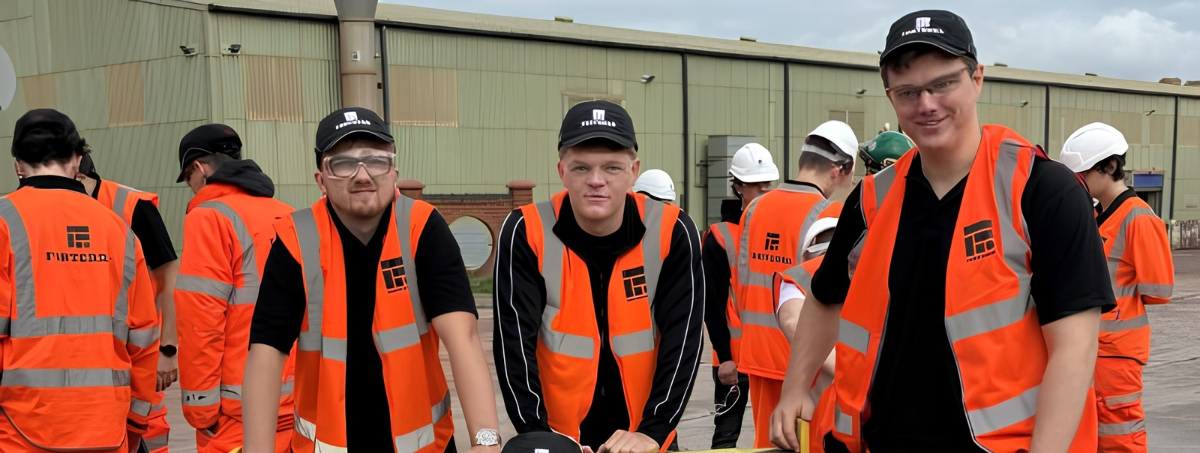
Forterra has welcomed 12 new manufacturing and engineering apprentices in its September intake, ten of them mechatronic maintenance technicians, giving brick and block manufacturers an example of how maintenance skills for modern plants are being grown in-house.
The mechatronic apprentices will work across Measham, Desford, Hoveringham, Hams Hall and Kings Dyke, learning to install, maintain and repair machinery and industrial systems.
One machinist and one plater fabricator apprentice will be based at Forterra Engineering Services in Whittlesey, where the plater fabricator will work with structural metal plates and sections before welding and the machinist will set up, programme and operate precision machine tools.
The intake builds on a programme under which Forterra has employed 77 operational apprentices since 2016, and the company is a member of the 5% Club, which commits employers to having 5 per cent of their workforce in earn-and-learn roles.
Forterra, a leading UK manufacturer of clay and concrete building products including London Brick, Butterley and Thermalite, employs around 1,400 people across 14 manufacturing sites and was the first UK brick manufacturer to join the Race to Zero campaign.
Sarah Renton, group people director at Forterra, said the industry faces a significant skills challenge, with employers needing to attract new talent while retaining and passing on the knowledge of an experienced workforce. She said apprenticeships let Forterra develop the technical skills it will need and give people a strong route into engineering and manufacturing, learning alongside experienced colleagues.
The intake reflects a manufacturer building maintenance capability for machinery and industrial systems internally, with mechatronic training combining mechanical, electrical and control skills.
The shortage is measurable: Make UK estimates 55,000 long-term vacancies are costing the UK economy £6bn a year in lost output, and half of manufacturers cannot source the talent they need locally.
For the sector, the 12 apprentices are a small intake against that gap, but spread across five manufacturing sites and a fabrication site, they show skills being built where equipment actually runs.
The wider signal for the sector is that routine maintenance roles in manufacturing now require mechatronic skills, pushing employers to recruit apprentices rather than hire ready-trained technicians.
Source: The Manufacturer / Learning News (Make UK data)





.png)
