

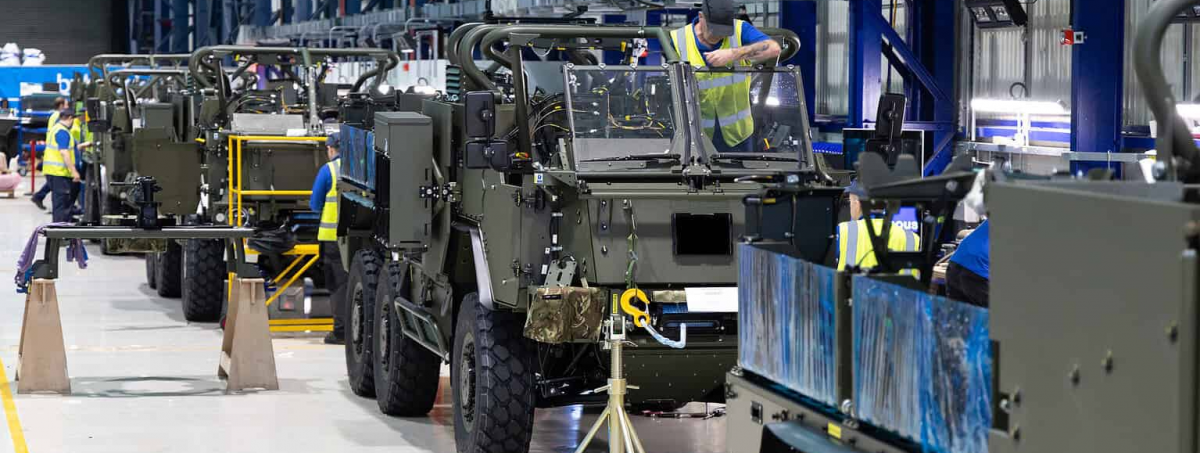
Babcock International has signed a memorandum of understanding with Isembard, as reported by The Manufacturer, to assess whether Isembard's MasonOS platform can identify extra manufacturing capacity across Babcock's UK facilities, giving defence suppliers a possible route to spare capacity at a major defence prime.
The Manufacturer reported that the platform uses data from production lines, machinery, workforce schedules and supply chains to compare available capacity with current and forecast demand, and that a feasibility study due to begin in early 2027 will look at releasing capacity to Babcock's SME ecosystem and suppliers.
According to The Manufacturer, an estimated £150m in additional revenue could be generated between the two organisations by allocating available space, though it is an estimate.
Babcock International Group is a defence company with UK manufacturing facilities, according to Aero Magazine and The Manufacturer, and Isembard is a London-based manufacturing scaleup founded in 2024 that runs owned and franchised precision component factories using MasonOS, according to Vestbee.
ADS Advance reported that Isembard has grown revenue tenfold in 12 months and targets 100 owned and franchised UK factories by the end of 2028, creating 2,200 jobs.
Jonathan Reynolds, secretary of state for business, innovation, science and trade, said in comments carried by The Manufacturer that the partnership brings defence companies and technology firms together to deliver capability faster. Andrew Munday, global technology director at Babcock, said it could unlock capacity across UK operations.
The MoU reflects defence primes using software to find spare capacity before building new, with The Manufacturer reporting the feasibility study will also assess access for Babcock's SME suppliers.
The timing follows the Defence Investment Plan, which ADS Advance reported commits close to £300bn and names sovereign capability, autonomous systems and resilient supply chains among its priorities.
For the sector, Isembard's franchise-and-software model, described by Startup Magazine as a way to add capacity without the capital intensity of wholly owned roll-outs, now meets a prime's own factories.
The wider signal for the sector is that capacity visibility is becoming a procurement asset in defence manufacturing, with a £150m revenue estimate tied to how much space the study finds.








.png)
