

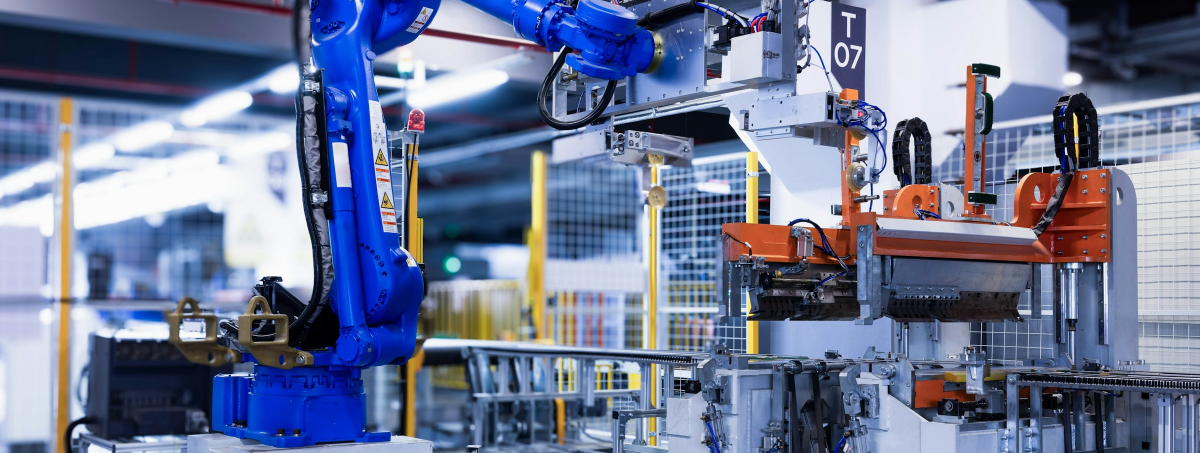
The global robotics industry has reached a defining milestone, with the International Federation of Robotics reporting that five million industrial robots now operate in factories worldwide, according to The Robot Report’s latest state-of-play analysis. Installations in 2025 hit 603,000 units, up 11%, and are forecast to reach 806,000 by 2029. For Irish manufacturing leaders, this acceleration in global industrial automation demands strategic attention.
Three strategic imperatives emerge for C-suite leaders across Irish manufacturing. First, global automation investment is reshaping competitive advantage in every sector where Ireland excels, from pharmaceuticals to food production and advanced manufacturing. Second, collaborative robots and AI-driven automation are opening new pathways suited to Ireland’s skilled manufacturing workforce. Third, accelerating Ireland’s robot density is now a direct competitiveness imperative in an industry moving at speed.
The IFR World Robotics 2026 report, released 24 September, defines the scale of change. Five million industrial robots now operate in factories worldwide, more than double the total seven years ago, with 603,000 new units installed in 2025 alone. Annual installations are forecast to reach 806,000 by 2029 as demand accelerates. IFR President Jane Heffner confirmed that industrial automation is progressing at high speed globally.
Commercial momentum is equally compelling. The Association for Advancing Automation reported that robot order value increased 6.6% in the first half of 2026, with non-automotive sectors driving growth as automotive OEM orders softened. Labour shortages in electronics, food and beverage, and pharmaceuticals are primary drivers. Ireland, which employs over 220,000 people in manufacturing, faces the same labour market pressures making automation investment necessary and timely.
Robot density data reveal the opportunity gap. Western European manufacturers averaged 267 robots per 10,000 employees in 2024, the highest regional figure globally, yet global leaders South Korea, Singapore, and Germany significantly exceed that level. Collaborative robots, autonomous mobile robots, and AI-enabled systems are expanding automation into new applications, making smart manufacturing accessible to facilities of all sizes across Ireland’s pharmaceutical, food, and engineering sectors.
Three priorities stand out for Irish manufacturing leaders. First, conduct automation readiness assessments to identify where collaborative robots and Industry 4.0 technologies can address labour scarcity across production processes. Second, engage IDA Ireland and Enterprise Ireland’s Manufacturing Productivity Programme for funding, expertise, and learning. Third, frame automation investments as enablers of productivity and skilled employment growth, building workforce confidence in the transition to robotics-assisted production.
The Robot Report analysis and IFR World Robotics 2026 data deliver a clear message: in a global market moving at speed, manufacturing excellence depends increasingly on intelligent industrial automation. For Irish pharmaceutical, food production, and engineering manufacturers, the strategic case for robotics investment has never been stronger, and the five million operational milestone marks a powerful and growing trajectory, not a destination.





.png)
