
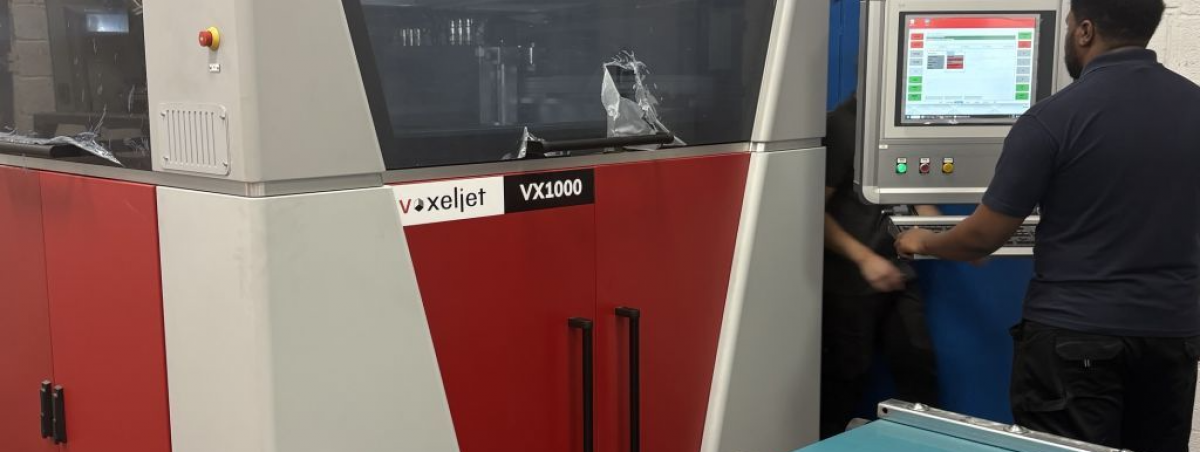
Sarginsons Industries has installed an inorganic 3D sand core printing system at its Coventry foundry, becoming the first UK caster to run the process, a move that gives automotive OEMs a domestic casting partner able to compress aluminium lead times from six to eight weeks down to 24 hours.
Sarginsons put £800,000 into the equipment, which prints sand cores at roughly 54 litres per hour; the company said the cycle would let OEMs develop complex lightweight components without losing manufacturability.
The inorganic binder system nearly eliminates the gases released by conventional organic binders during casting, which can become trapped in the metal and degrade quality and mechanical performance, while also removing emissions tied to conventional binders.
Gavin Shipley, technical director at Sarginsons Industries, said becoming the first UK foundry with the capability demonstrates the company's commitment to investing in technologies that benefit customers, the industry and the environment, and that the investment enables faster production of increasingly complex castings while improving quality and reducing environmental impact. He said: "Together, those advantages help manufacturers meet growing demands for lighter, higher-performing components without compromising sustainability."
Sarginsons Industries is a Coventry-based foundry that led the £5.8m government-backed PIVOT programme and is drawing up proposals for a £30m Future Foundry casting industrialisation hub.
The investment reflects a wider push among UK foundries to adopt inorganic binder and 3D sand core printing to compress lead times and meet demand for lightweight, complex castings without expanding headcount or floor space.
The timing is notable against a shrinking domestic base: the UK casting industry has contracted from thousands of foundries to a few hundred in recent decades, even as the UK automotive aluminium die casting market is forecast to grow from $1.8bn in 2026 to $2.7bn by 2035, concentrated around Coventry's West Midlands cluster.
For the sector, Sarginsons' government-backed PIVOT programme and its proposed £30m Future Foundry industrialisation hub position the company as a potential blueprint for wider UK casting modernisation, rather than a single-site technology upgrade.
The wider signal for the sector is that inorganic binder and 3D sand core printing adoption is becoming a competitive differentiator for UK foundries competing against faster, lower-cost overseas casting suppliers, rather than a niche prototyping technology.
Source: VoxelMatters / IBISWorld / IMARC Group / MarkWide Research





.png)
