

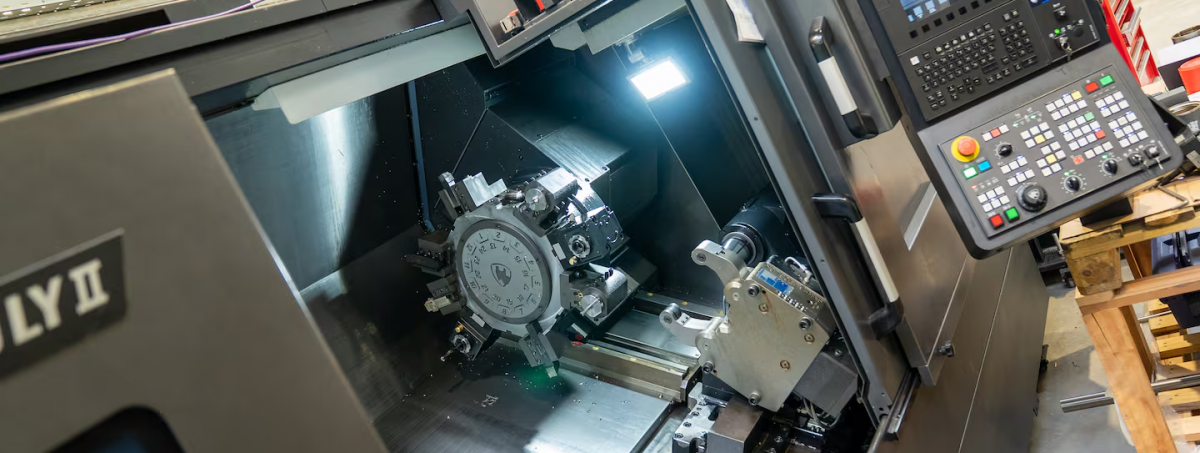
Queen's University Belfast has officially opened its £100m Advanced Manufacturing Innovation Centre at Global Point, Newtownabbey, giving Northern Ireland manufacturers open-access engineering expertise and facilities to adopt robotics, automation and AI without carrying the capital cost alone.
The centre is expected to create up to 1,500 jobs, contribute £1.3bn to the economy and support the training of 300 apprentices by 2050, with specialist capability spanning robotics, automation, artificial intelligence, digital twins, advanced materials and machining.
The £100m investment combines funding from the UK Government and Northern Ireland Executive through the Belfast Region City Deal with contributions from Queen's University Belfast, Ulster University and Antrim and Newtownabbey Borough Council, which invested £10m.
AMIC, led by Queen's University Belfast, is an industry-led, open-access manufacturing and engineering innovation centre with an expert engineering team, and now offers fully funded skills development for eligible Northern Ireland SMEs through the Advance SME programme.
Sarah Owen, minister for Northern Ireland, said the centre will help drive business competitiveness, decarbonisation and high-value job creation, adding that the UK Government's investment of almost £80m through the City Deal, alongside partners' support, will invest in local talent. Henry Cushinan, mayor of Antrim and Newtownabbey, described the centre as a game changer for advanced manufacturing, supporting local businesses, attracting investment and developing the skills the economy needs.
The opening reflects a regional strategy of using publicly co-funded, open-access centres to help small and mid-sized manufacturers adopt automation, AI and digital twins that they could not justify buying individually, with the centre positioned as an industry-led bridge between academic research and commercial application.
The timing reflects the scale of the sector it targets: manufacturing supported nearly 100,000 jobs in Northern Ireland in 2023, one in ten workforce jobs against 7.1 per cent across the UK, according to Manufacturing NI.
For the sector, the centre shows publicly co-funded innovation infrastructure moving from construction into delivery, with skills programmes for SMEs running alongside access to advanced equipment.
The wider signal for the sector is that regional manufacturing competitiveness is increasingly being built through shared, open-access capability rather than firm-by-firm capital investment alone.
Source: News Letter / The Irish News / Infrastructure Now / Manufacturing NI





.png)
