

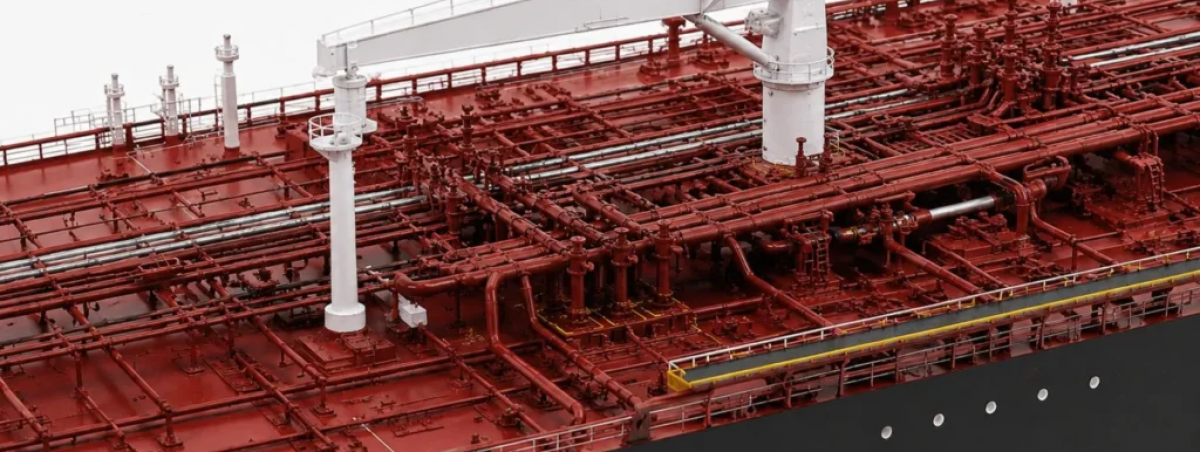
Marea Scale Models has launched commercial operations in the UK with Ai Refloat, an AI-assisted design process that adapts complex vessel structures to scale, giving manufacturers of bespoke products a working example of AI applied to the design stage while skilled hand finishing stays in place.
The software reproduces detail down to 30 microns, preventing visual degradation of fine components such as railings, piping and deck equipment, and supported first commercial orders for container ships, bulk carriers and crude oil tankers delivered to an international maritime client within two months.
Ai Refloat is limited to the initial 3D modelling stage and does not manufacture or assemble models autonomously; once a design is approved, the team completes assembly, painting, detailing and weathering by hand, with a master model maker of more than 30 years' experience overseeing surface finishing.
Marea Scale Models is a bespoke scale ship and yacht model maker whose workshop, led by a production director with more than 15 years in miniature and mechatronics, draws on 3D printing, metal casting, laser cutting, CNC milling and hand finishing; its first focus is merchant shipping, including container ships, tankers and LNG carriers.
Rezz Ghanty, creative director of Marea Scale Models, said: "Technology should not replace skilled people." He said the aim is to remove delays in phases that add no value, so specialist staff can focus judgement on refining a vessel's appearance rather than repeatedly solving the same scaling problems.
The company has also developed a line of reduced-format presentation models made from recycled plastic recovered from the marine environment, produced in limited runs of ten units for shipowners marking newbuild deliveries, naming ceremonies or corporate events.
The launch reflects craft manufacturers applying AI to the design stage rather than the shop floor, using software to remove repetitive scaling work while keeping skilled hand finishing as the product's differentiator.
The approach mirrors wider UK manufacturing, where only 2 per cent of manufacturers say AI is widely embedded in operations, with skills shortages the main barrier, according to Make UK.
For the sector, a human-in-the-loop model, where AI shortens design and people retain final judgement, offers smaller manufacturers a lower-risk route into adoption than full automation.
Source: Inspenet / The Digital Ship / MarineLink / Make UK







.png)
