

Encirc has announced a £700k investment in workforce skills over three years, giving glass manufacturers an example of how decarbonisation targets are translating directly into training budgets rather than purely into new plant and equipment.
The investment will fund a new One Horizon Programme, a continuous professional development initiative designed to strengthen leadership capability, helping staff develop the technical, digital and leadership skills needed to support new technologies, alternative fuels and future ways of working as the industry evolves.
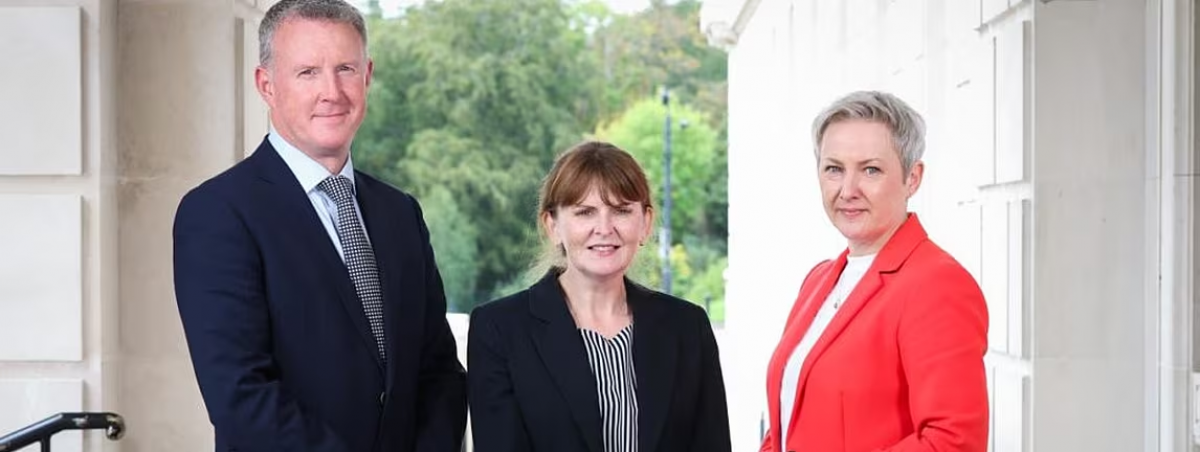
Invest NI has offered Encirc £157,200 in financial support for the three-year training plan, which Sean Murphy, Encirc's managing director, said would help the company accelerate its investment plans and develop the skilled workforce needed to produce glass without generating carbon emissions.
Economy Minister Dr Caoimhe Archibald said Encirc is an important employer in Fermanagh and a leading manufacturer with a clear vision for a sustainable future, and that the investment will help employees develop skills needed to support plans to reach net zero emissions in its glass manufacturing process from 2030. Murphy said: "It will also ensure our Derrylin site remains at the forefront of sustainable glass manufacturing."
Encirc, based in Derrylin, Co Fermanagh, part of Spanish packaging group Vidrala, produces approximately three billion glass containers annually for UK brands.
The investment reflects a wider recognition across glass manufacturing that decarbonisation depends as much on retrained operators as on new furnace and fuel technology, since alternative fuels require different operating skills from conventional gas-fired furnaces.
Encirc is building a hydrogen-powered furnace at its Elton, Cheshire site, intended to produce the world's first net-zero glass bottles at scale from 2027, part of a sector where around 60 per cent of the UK's 32 existing glass furnaces are due for replacement over the next decade.
For the sector, Invest NI's £157,200 contribution co-financing private decarbonisation training signals that skills investment, not just capital equipment, is becoming eligible for government industrial support in Northern Ireland.
The wider signal for the sector is that hitting 2030-style net zero targets in hard-to-abate processes like glass melting depends as much on workforce capability as on furnace and fuel technology, particularly given the UK's comparatively high industrial electricity costs relative to the rest of Europe.
Source: The Irish Post / edie / IOM3





.png)
