

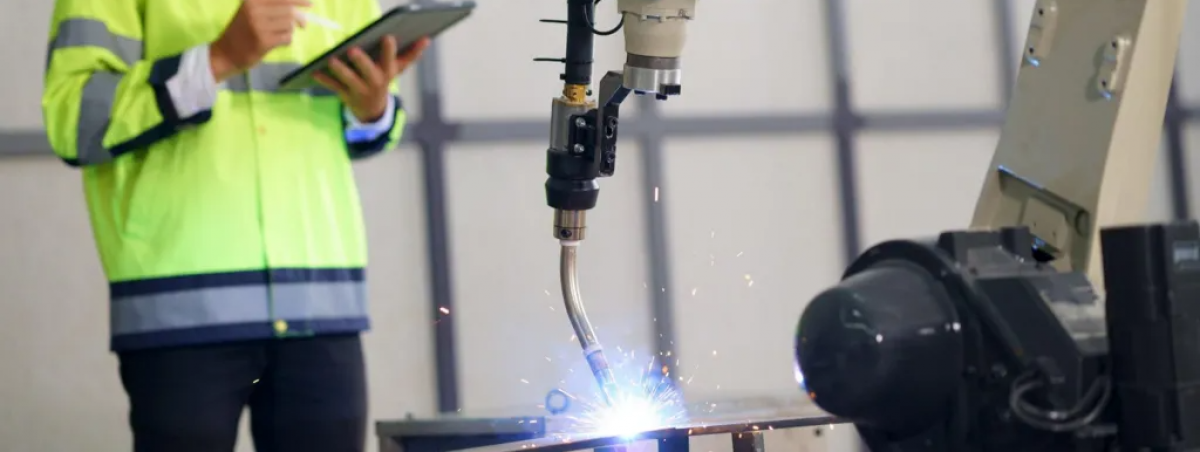
Five Northern Ireland manufacturers are to invest almost £8 million (€9.3 million) in robotic welding technology as part of the first major collaboration directed by the Advanced Manufacturing Innovation Centre (AMIC), in a move that reflects growing pressure on European manufacturers to remain globally competitive. The project has direct relevance for industrial manufacturers navigating automation investment decisions and skills shortages in welding and fabrication.
As reported by BBC News NI, the five participating companies are Hyster Yale, Terex, Nugent Trailers, Four Dee and Datum Design. The project is backed by almost £5 million (€5.8 million) in funding from Invest NI, with the remainder contributed by the businesses themselves.
AMIC is part of the Belfast Region City Deal and was established to help local businesses adopt new technologies and processes. The centre provides open access equipment and facilities that partner companies can use to address shared operational challenges.
Sam Turner, chief executive of AMIC, said that while robotic welding was not new, the project would apply it alongside digital technologies to maximise productivity. Turner added: "The project will help businesses design their products and processes for automated welding, improve quality and productivity and address the gap in availability of experienced skilled welders. Using open access equipment and facilities in AMIC, we are able to address common challenges and opportunities for the partner companies."
The project is expected to create approximately 20 jobs across the five companies, though Turner noted that job creation is not the primary objective. The focus is on keeping local businesses globally competitive in the face of what economists refer to as the second China shock, a term describing increasing Chinese dominance across higher-value manufacturing sectors including cars, batteries and chemicals.
Alan Donnelly, director at Magherafelt-based Four Dee, a steel fabrication firm, said participation in the project would allow the company to improve how robotic welding is programmed and delivered. He said: "By developing off line, virtual programming methods, we hope to reduce downtime on the shop floor while improving efficiency and consistency across our products. This collaboration will help us build a more adaptable, competitive welding operation and strengthen our ability to deliver large scale, custom machinery for customers at home and abroad."
The investment underlines the role collaborative industry and public funding models can play in accelerating technology adoption across small and mid-sized manufacturers facing cost and skills pressures.






.png)
